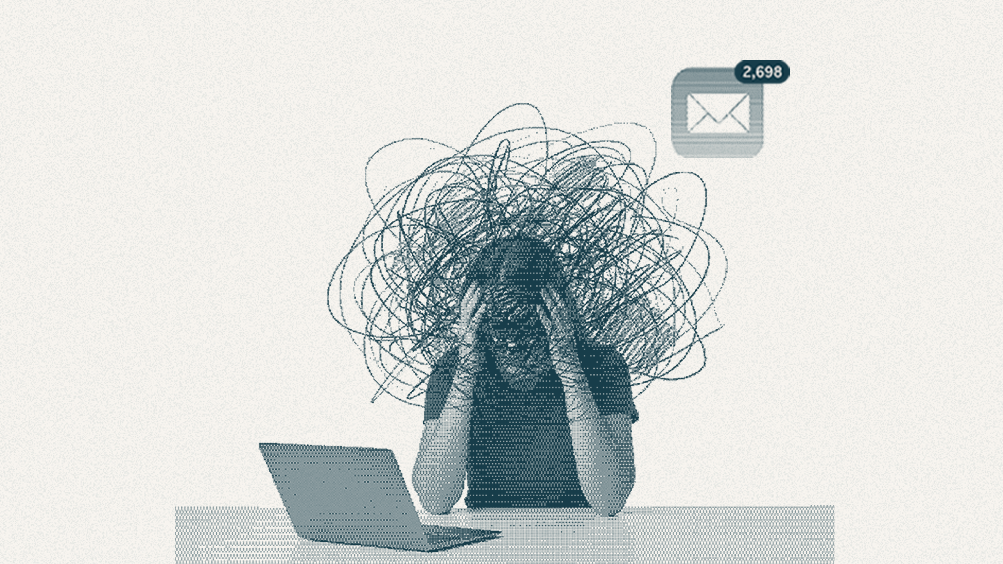
The Research Is More Alarming Than the Headlines Suggest
Gloria Mark at UC Irvine didn't study context switching in a lab. She observed office workers in their natural environment for extended periods. The findings: the average worker is interrupted every 3 minutes and 5 seconds. Recovery time: roughly 25 minutes. And workers don't return directly to the original task. They switch to an average of 2.26 other tasks first.
Her follow-up work in 2023 measured self-interruption, the times we break our own focus without any external trigger. The average focus span before self-interruption: 47 seconds. Down from 2.5 minutes in 2004.
The $450 Billion Tax Nobody Budgets For
Extrapolated from Mark's research and Microsoft's workforce studies, context switching costs the US economy an estimated $450 billion annually in lost productivity. At the individual level, roughly $270 per person per day. For a team of 20 people at $120/hour, the cost is over $500,000 per year in switching overhead alone.
The APA research by Rubinstein, Meyer, and Evans found that task switching creates measurable drops in both speed and accuracy. For simple tasks, the cost is small. For complex cognitive work (writing, analysis, advisory, review), the costs are severe.
Why Email Is the Biggest Source of Switches
Microsoft's 2025 Breaking Down the Infinite Workday report found that the average worker now receives 117 emails and 153 Teams messages per day. Sophie Leroy's research on attention residue shows that part of your mind stays stuck on the previous task after every switch. The APA notes the aggregate drag can reach 40% of productive time.
Every time you glance at your inbox, even without replying, Loughborough University research shows it takes an average of 64 seconds just to recover from the glance. Those seconds compound across 15+ email checks per day.
What the Best Performers Do Differently
Cal Newport's deep work research shows that sustained focus periods can double both productivity and quality. The top 10% of performers maintain focus for an average of 52 minutes before taking breaks.
The pattern from every study: batch communication, protect focus blocks, and move structured work out of the inbox. When requests, tasks, and follow-ups live in a dedicated environment instead of an email thread, the interruption cycle breaks.
See how Pidgy helps professionals protect focus time by moving structured work out of the inbox.