The Promise vs. The Reality
Merlin Mann proposed inbox zero as a time management approach: process every email to zero by deciding, delegating, responding, deferring, or deleting. The idea was elegant. The execution was brutal.
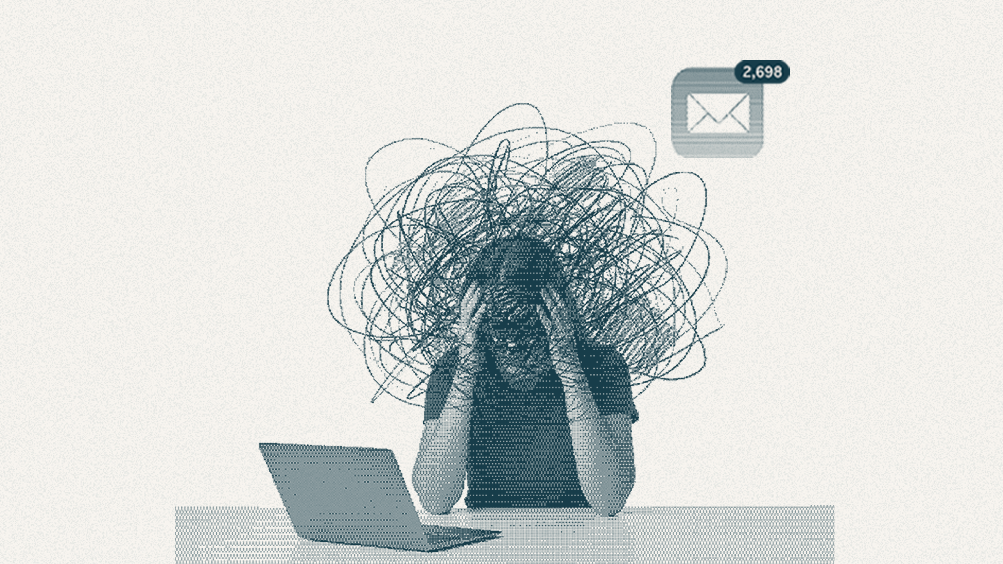
Microsoft's 2025 Work Trend Index reports that knowledge workers receive 117 emails daily. CloudHQ's 2025 data puts it at 121 received plus 40 sent. At that volume, inbox zero means spending your entire morning triaging messages, most of which aren't important. Mailbird's research found that fewer than a third of professionals say more than half their emails are business-critical.
Inbox zero optimizes the wrong thing. It optimizes inbox management instead of work completion.
What Research Actually Recommends
University of British Columbia research found that workers limited to checking email three times per day stayed just as productive while reporting significantly less stress. Atlassian found that the first hour of the workday is consumed by email for 58% of professionals. Protecting that first hour alone changes the entire day.
Cal Newport's deep work framework goes further: block 2-3 hours for uninterrupted focused work. The top 10% of performers maintain focus for 52 minutes before taking a break. That's nearly impossible if your inbox is open.
The Real Problem: Email as Operating System
Email was designed for messages. We turned it into a task manager, a document exchange platform, a project tracker, and a CRM. None of those jobs are things email does well. When a document request, a client follow-up, and a project update all live in the same inbox, everything competes for attention at the same priority level.
McKinsey's research shows email is the second-largest time sink after meetings, consuming 28% of the workweek. That number hasn't dropped despite two decades of productivity tools, because the tools sit on top of email instead of replacing it for the work email shouldn't be doing.
What Actually Works
The research points to one consistent pattern: move structured work out of the inbox. Document requests, task assignments, follow-ups, and approvals belong in environments designed for them, where every item has an owner, a deadline, and visible status. Email stays for what it's good at: asynchronous messages between humans.
The professionals who reclaimed their time didn't get better at managing email. They stopped using email for things it was never built to do.
See how Pidgy helps professionals move structured work out of the inbox and reclaim focus time.