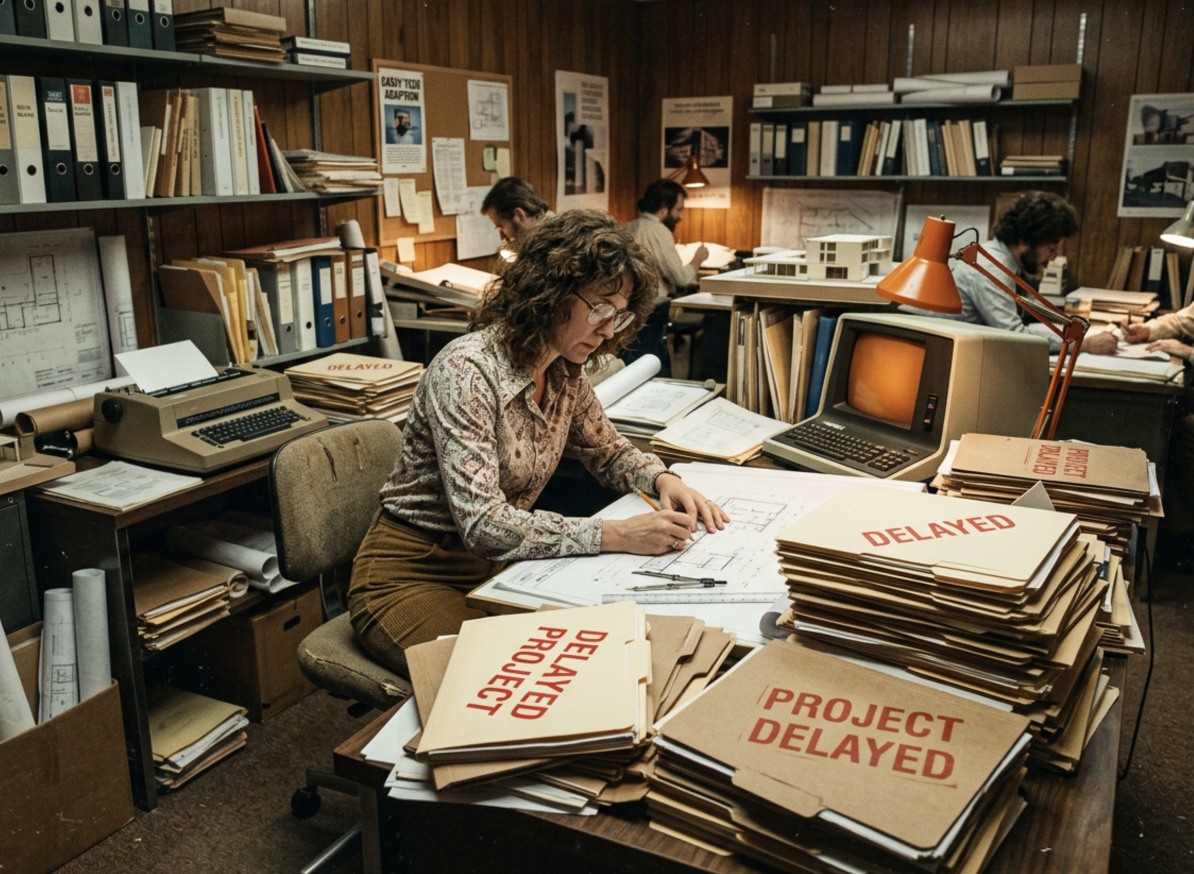
The 8.5% Stat That Should Reframe How Architects Think About Delivery
A PlanRadar study covering nearly 16,000 major construction projects found that only 8.5% were completed on time and within the allocated budget. Contributing factors included frequent changes to project documentation, tools that fail to synchronize across stakeholders, and information loss between project phases.
Most architects hear that stat and assume it's a construction problem. It's not. Or at least, not entirely. The information that causes construction delays and rework often originates in the design phase. And the handoff between design and construction is where that information gets lost.
The Version Control Problem Nobody Admits
The Construction Industry Institute found that 52% of all rework traces directly to outdated or missing documents reaching the field. PlanRadar's 2025 cost analysis shows that rework typically accounts for 5% to 15% of total project cost on well-managed sites, but can reach 30% on poorly managed ones.
Inside the architecture firm, version control exists. BIM models are coordinated. Review workflows are structured. But the moment a document crosses the firm boundary, via email attachment, shared drive link, or file transfer, version control breaks. The contractor works from a PDF that was current last week. The subcontractor has a specification that was superseded two revisions ago. The RFI response sits in an inbox that three people share.
What Architects Actually Control
Architects can't control material costs, labor availability, or weather delays. But they control something that directly affects whether a project finishes on time and on budget: how design information reaches the people who build from it.
During construction administration, architects review submittals, respond to RFIs, issue supplemental instructions, and process change orders. Every one of these interactions involves document exchange with external parties. When those exchanges run through email, information gets lost. When they run through a structured collaboration environment, every document has a clear owner, a clear version, and visible status.
The 8.5% on-time-and-on-budget rate won't move until the information handoff between design and construction is as structured as the design process itself.