The Numbers Behind the Feeling
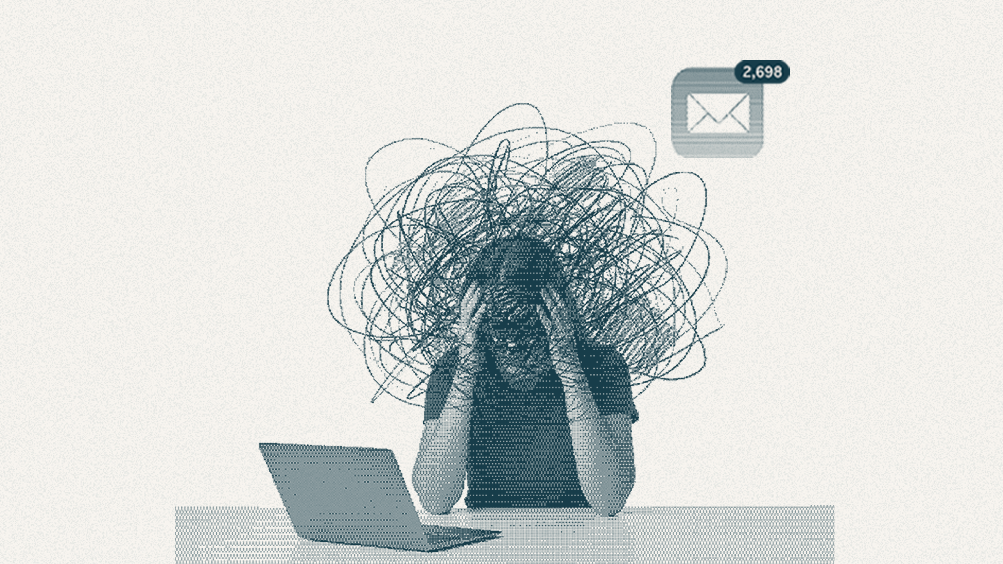
Email productivity research compiled from Adobe, McKinsey, Radicati Group, and Microsoft paints a consistent picture. The average professional receives 126 emails per day and spends 2.6 hours managing them. Only 24% of those emails are relevant and important. Email is the second-largest time sink after meetings, consuming 28% of the average workweek.
Despite the rise of messaging tools like Slack and Teams, email volume continues growing at 3% annually. Statista data based on Radicati Group tracking shows 376 billion emails were sent and received globally per day in 2025, projected to reach 424 billion in 2026.
The Interruption Tax
Gloria Mark, professor at UC Irvine, observed office workers in their natural environment and found that the average worker is interrupted every 3 minutes and 5 seconds. The recovery time to return to the original task: roughly 25 minutes. Workers rarely return to the original task directly, switching to an average of 2.26 other tasks first.
Mark's follow-up research (2023) found something even more alarming: the average focus span before self-interruption is now under 47 seconds. We're not just being interrupted by email. We're interrupting ourselves to check it.
Atlassian data makes the annual cost explicit: 13 hours per week times 52 weeks equals 676 hours per year on email. That's nearly 17 full 40-hour work weeks. You're spending four months of every year in your inbox.
The Productivity Loss Is Measurable
McKinsey's research estimates that email overload decreases productivity by as much as 40%. That figure accounts for the time spent reading, composing, and managing messages, combined with the context-switching cost of constant interruptions.
Extrapolated from Gloria Mark's work and Microsoft's workforce studies, context switching costs the US economy an estimated $450 billion annually in lost productivity. At the individual level, that's roughly $270 per person per day.
What Actually Works
Research from the University of British Columbia found that workers limited to checking email three times per day stayed just as productive while reporting significantly less stress. Cal Newport's deep work framework shows that sustained focus periods can double both productivity and quality.
The pattern is consistent across every study: fewer interruptions, longer focus blocks, and structured communication channels outperform the always-on inbox every time. The problem isn't discipline. It's design. When collaboration runs through email, the interruptions are built into the system.
The fix isn't inbox zero. It's moving structured work out of the inbox entirely, into environments where requests, tasks, and follow-ups have their own space.
See how Pidgy helps professionals take back the hours lost to email overload.