The email problem isn't about hackers. It's about architecture.
When people think about cybersecurity, they picture sophisticated attacks: zero-day exploits, ransomware, nation-state hacking groups. Those exist. But the far more common vulnerability in accounting firms is much simpler: email is an insecure, uncontrolled channel for sensitive data, and firms use it for everything.
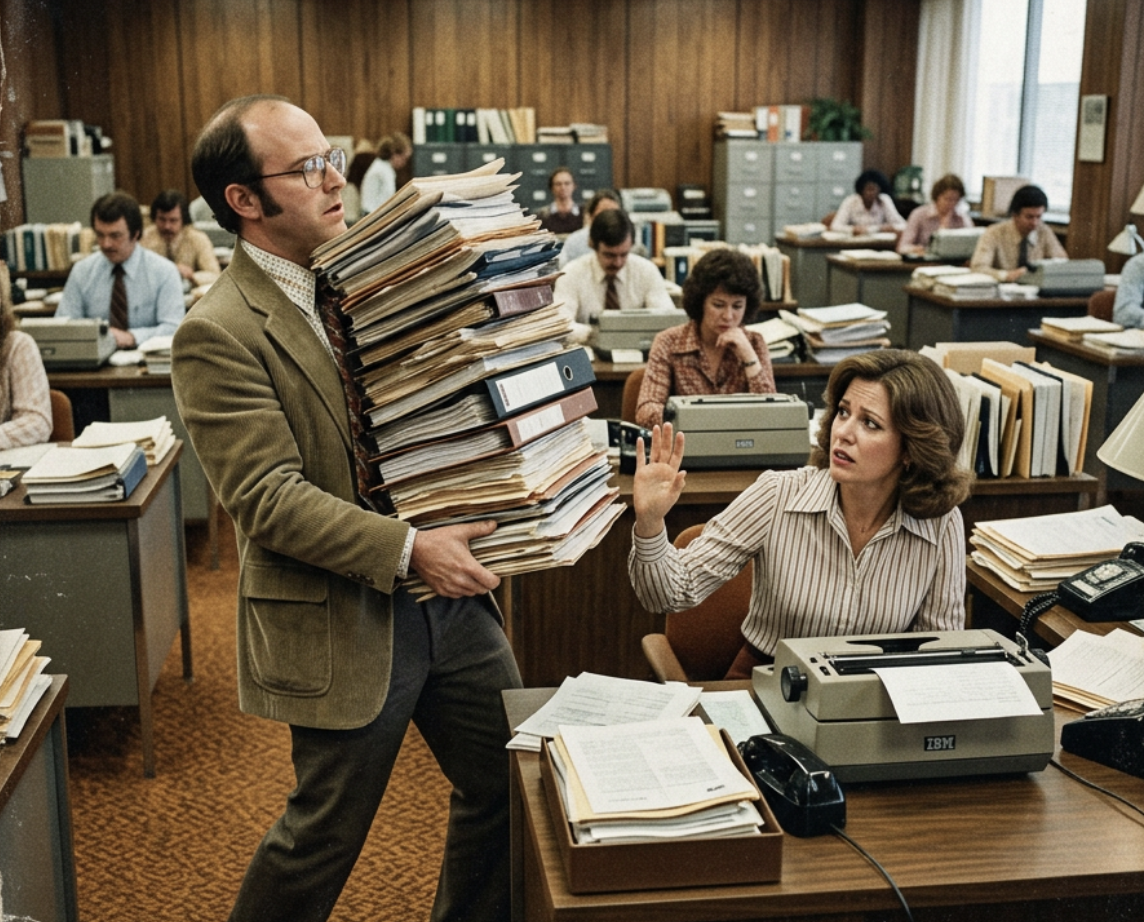
Consider what happens when a client emails their payroll records. The email sits on the client's mail server. It sits on your firm's mail server. It's in the client's sent folder, potentially accessible to anyone with their password. It's in the associate's inbox, mixed with newsletters, meeting invites, and vendor pitches. If the associate forwards it to a colleague, there's now another copy. If someone downloads the attachment, it lives on their local drive.
None of this is tracked. None of it is encrypted end-to-end. None of it has access controls. There is no log of who opened the file, when, or from where. If that email gets intercepted, forwarded to the wrong person, or accessed through a compromised account, the firm might never know.
The 2025 Verizon Data Breach Investigations Report found that 74% of data breaches involved a human element, including social engineering, stolen credentials, and errors. The IBM Cost of a Data Breach Report 2025 puts the average breach cost at $4.88 million. Accounting firms, with their concentration of sensitive financial data, are priority targets.
The attachment habit nobody questions
Every accounting professional knows, instinctively, that emailing sensitive documents is risky. If you asked any partner at any firm whether they'd recommend sending a client's Social Security number as an email attachment, they'd say no.
And yet, that's what happens dozens of times a week. Because the alternative, in most firms, is cumbersome. Encrypted email is clunky. Secure portals require clients to remember another password. File-sharing links expire. The path of least resistance is: attach, send, move on.
The 2025 Wolters Kluwer Future Ready Accountant report found that 88% of organizations experienced at least one trust-undermining incident in the past year. Cybersecurity emerged as a growing strategic priority, particularly as firms store increasing volumes of sensitive data in digital environments.
But the risk isn't only about external attacks. It's about the everyday flow of work. When a client emails the wrong firm a set of financial documents (it happens more than anyone admits), there's no recall mechanism. When an associate accidentally forwards a client file to another client, the damage is done before anyone notices. When a departing employee's inbox sits accessible for months after they leave, every attachment they ever received is exposed.
These aren't dramatic hacking scenarios. They're Tuesday. And they happen because email was designed for messages, not for managing the movement of sensitive documents between organizations.
Compliance is catching up
Regulators are paying attention. The landscape is moving from "prove you're compliant" to "prove you're operationally secure." New frameworks demand not just policies on paper but evidence of how data moves, who accessed it, and when.
The Wolters Kluwer report found that regulatory complexity remains the number one challenge for accounting firms for the fourth time in six years, with 79% of firms expecting it to impact them in the next twelve months. Part of that complexity involves demonstrating adequate data handling practices, something that becomes nearly impossible when your primary collaboration channel is unauditable email.
Try answering these questions with your current setup: which client documents are stored where? Who has accessed them? When were they last modified? Is every copy accounted for? If a regulator or a client asked for a full audit trail of how their financial data was handled, could you produce one?
For most firms, the honest answer is no. Because email doesn't create audit trails. It creates a mess of scattered copies with no centralized record.
What secure collaboration actually looks like
The fix isn't about layering encryption on top of email. That's a patch on a broken system. The fix is about replacing email as the channel for sensitive document exchange entirely.
When client collaboration moves to a structured environment, security becomes a byproduct of how the work flows. Every document request has a defined destination. Every upload is tracked with a timestamp and a user record. Every access is logged. Every version is controlled.
Clients don't need to worry about which email address to send things to or whether the attachment went through. They upload to a clear, organized space where each item has a defined slot. The firm sees exactly what arrived, when, and from whom. There's no ambiguity, no lost files, and no uncontrolled copies floating across inboxes.
This isn't about adding a security layer to existing workflows. It's about building workflows where security is structural. Where the way work moves is inherently auditable, traceable, and controlled, by design rather than by policy.
The question that matters
Ask your IT team (or yourself) this: if a client's data was compromised through your firm's email system tomorrow, could you reconstruct exactly what was accessed, by whom, and when?
If the answer is no, then your firm's security depends on nothing going wrong. And in a world of 3.8 million phishing sites, AI-generated attacks, and 74% of breaches involving human error, "nothing going wrong" isn't a strategy.
The sensitive data your clients trust you with deserves better than an email attachment. It deserves a system that was built for it.