The real time thief
The 2025 State of Accounting Workflow and Automation Report by Financial Cents surveyed 816 accounting firm owners. The single biggest workflow problem they reported? Getting documents from clients. Not compliance complexity. Not technical questions. Not hiring. Document chasing topped the list, surpassing every other challenge including the manual administrative work that held the top spot in previous years.
This deserves a closer look, because it reveals something the talent conversation keeps missing.
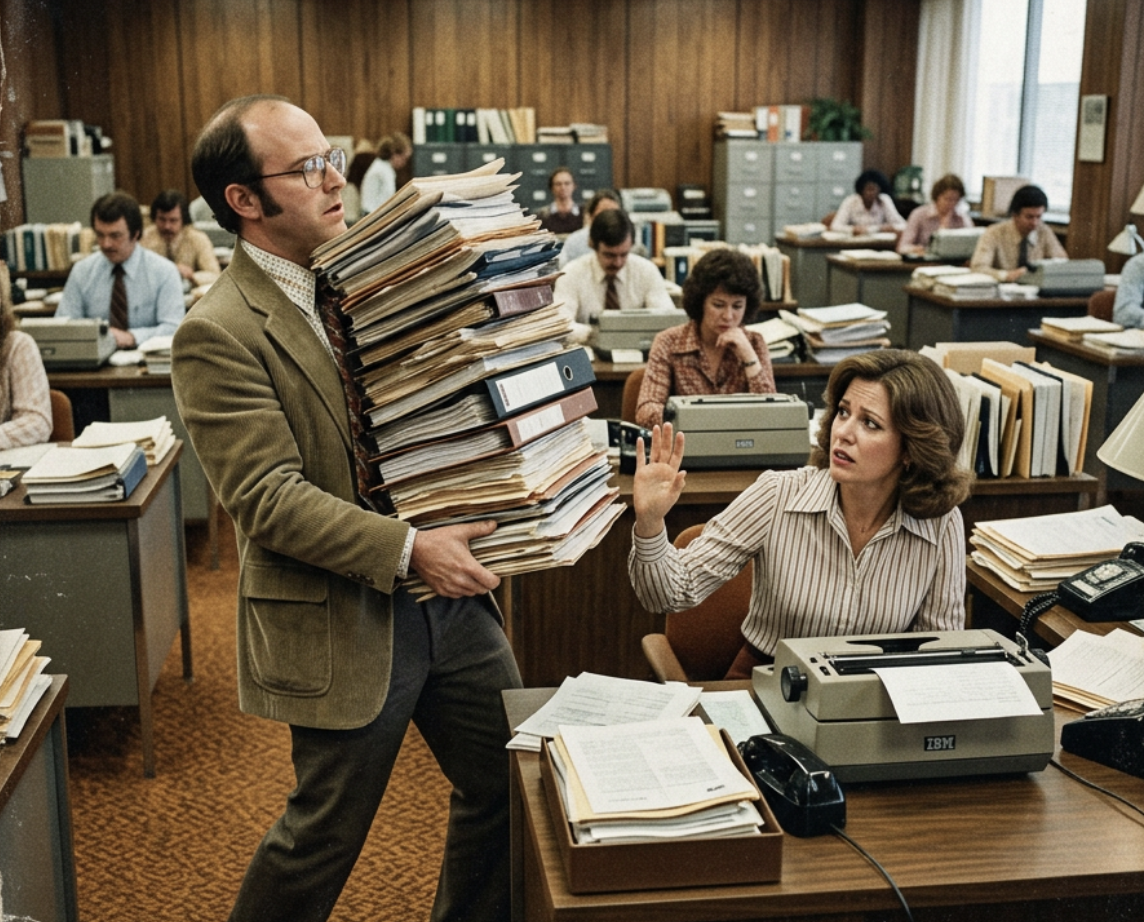
Here's what document chasing actually looks like. A manager prepares a request list for a client, usually 20 to 40 items. Annual accounts. Bank statements. Payroll summaries. Lease contracts. Insurance policies. The list goes out over email, typically as an Excel attachment.
Three days later, the client replies with nine of the thirty items. Some are PDFs. One is a photograph of a printed page taken on a phone. Two cover the wrong period. The manager opens the original Excel file, manually checks what arrived, highlights what's missing, and sends a polite follow-up.
Five days pass. The client sends six more items in a new email thread. The associate handling the engagement doesn't see it immediately because they're monitoring a different inbox. When they find it, two of the six were already submitted the previous week by the client's CFO, who wasn't copied on the original thread. Nobody told her the documents were already in.
This cycle repeats for weeks. Multiply it across 40, 80, 120 active clients. Every engagement has its own email chain, its own version of the Excel tracker, its own set of missing items living in someone's head.
Why this breaks people
Long hours are survivable when the work feels meaningful. The CPA Career Satisfaction Survey, conducted by Accountants Forward in late 2024, found something that surprised even its authors: plenty of accountants working 60-plus hours a week reported being highly satisfied. And plenty working under 40 hours felt miserable.
The difference wasn't volume. It was the nature of the work.
Mid-career professionals (managers and senior managers) were the least satisfied group. Only 17% of manager-level staff reported being highly satisfied. The researchers found that these people felt squeezed from both ends: not enough junior staff to handle basic tasks, and too many partners making demands on their time without providing support.
That "basic task" burden is largely coordination. Following up with clients. Tracking what came in. Searching inboxes. Updating spreadsheets. Re-sending reminders. None of this requires an accounting degree. All of it requires hours.
When a smart, experienced professional spends their morning doing work that a structured system could handle automatically, something breaks quietly. It doesn't show up as a dramatic resignation. It shows up as cynicism. Disengagement. The feeling that the firm doesn't respect their time. And eventually, a LinkedIn message from a recruiter offering something different.
The compounding effect
When someone leaves, their open engagements don't pause. They land on the next person's desk. Along with them comes a mess of half-finished email threads, unclear statuses, and no central record of what was requested, what arrived, and what's still outstanding.
The person picking up the work spends their first week just rebuilding context. Scrolling through a former colleague's inbox (if they even have access). Calling clients to re-confirm things that were already confirmed. Re-requesting documents that were already submitted but filed in the wrong folder.
This is how the talent crisis feeds itself. People leave because the work feels chaotic. Their departure makes the chaos worse for everyone who remains. Those people burn out faster. Some of them leave too.
The tool that was never designed for this
Email was built for messages. Short, informal, between two people. It has no concept of deadlines, document status, task ownership, or progress tracking. It doesn't know that item 14 on your request list arrived last Tuesday but item 15 is two weeks overdue. It can't tell your client what's still pending without someone writing another follow-up message by hand.
And yet, most accounting firms still run their entire client collaboration through it. They've added pieces around the edges over the years, a shared drive here, a file transfer tool there. But the operating system of the work remains the inbox.
What structured collaboration actually changes
When a firm replaces email-based document collection with a shared environment where every request exists as a clear action item (with an owner, a deadline, and a visible status), the shift looks small from the outside. On the inside, it changes the texture of every working day.
Follow-ups become automatic. When a client hasn't responded in three days, the system sends a reminder. Not the associate. Not the manager. The system. That alone removes hours of manual chasing per week.
Context survives turnover. When someone leaves or a colleague picks up an engagement mid-stream, the full history is right there. Every request, every submission, every clarification, every deadline. No inbox archaeology. No reconstruction period.
Partners get visibility without asking. Instead of a Monday morning meeting where everyone reports from memory, the dashboard shows reality in real time. Client A is 90% complete. Client B hasn't started. Client C has two overdue items.
Structure before intelligence
There's enormous noise about AI in accounting right now. Every vendor promises it will fix everything. And AI will matter. But it needs something to work with.
You can't point an AI at a thousand unstructured email threads and expect it to extract reliable task statuses. You can't automate follow-ups if nothing is tracking what's outstanding. You can't build a client dashboard if the source data lives in someone's personal spreadsheet.
Structure is the prerequisite. Once requests, submissions, and approvals live in a shared environment with clear ownership and deadlines, intelligence layers on naturally. Until then, AI is a coat of paint on a crumbling wall.
The question worth sitting with
The talent crisis is real. Fewer people are entering the profession, and the pipeline data suggests it will take years before enrollment growth translates into actual hires walking through your door.
But the crisis has a hidden accelerator, and it lives in how work moves between your firm and your clients. Every hour your team spends chasing, tracking, and searching is an hour they're not spending on the work they trained for. It's also an hour that pushes them one step closer to the exit.
You can't hire your way out of a process problem. But you can stop forcing structured work through an unstructured pipe.
The people you have are good enough. They just need the work to move the way it should.